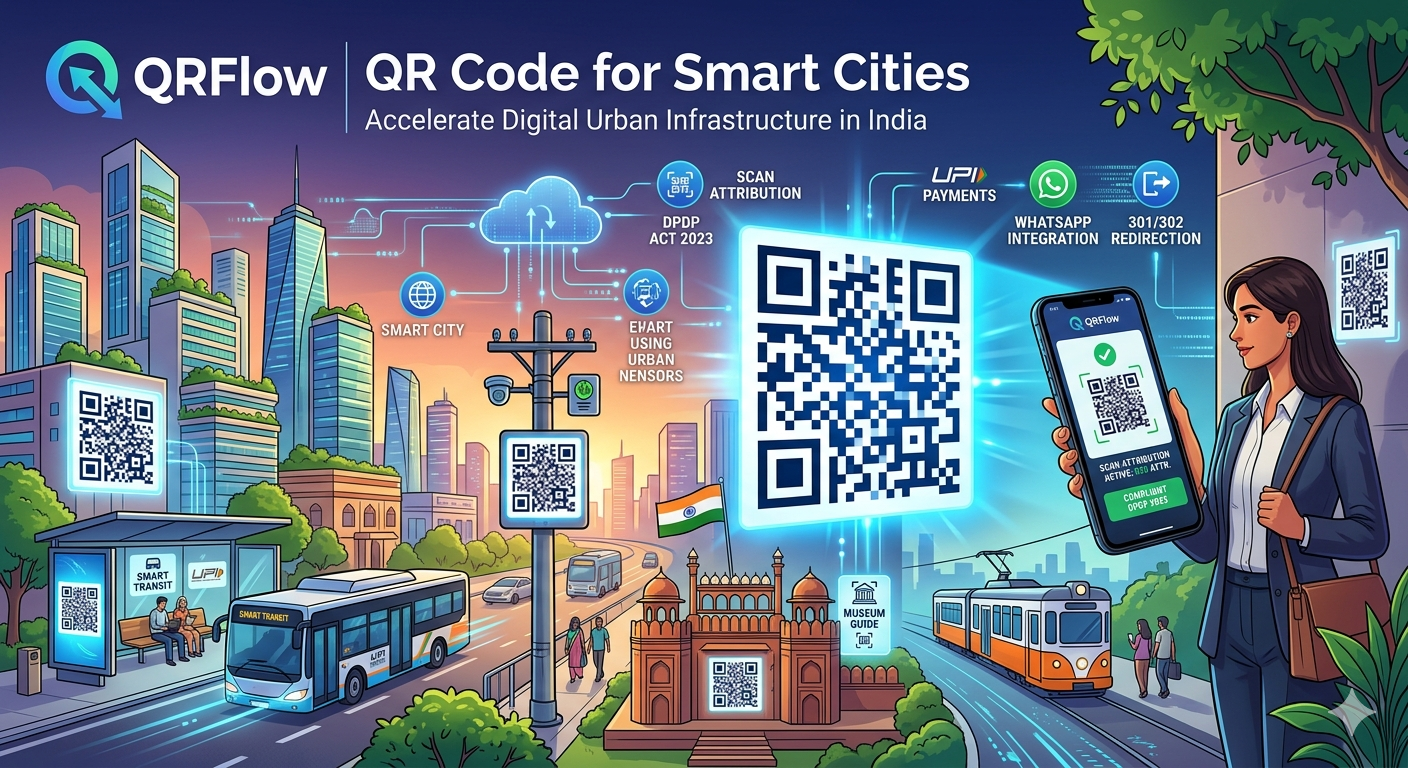
In the push for India’s "Smart City Mission," the gap between physical infrastructure (benches, bus stops, utility poles) and digital service delivery remains a primary bottleneck. Traditional physical signage is static; it cannot adapt to changing administrative schedules or urgent public notices.
"Dead Links" on urban signage—URLs that no longer work or lead to outdated portals—cost local municipal corporations thousands of hours in manual labor and create a disjointed experience for citizens. QRFlow transforms these touchpoints into dynamic entry gates that are easily managed from a centralized dashboard.
Static vs. QRFlow Dynamic: The Technical Difference
Urban infrastructure demands high availability and rapid content updates. Here is why enterprise-grade dynamic codes outperform basic static generators.
| Feature | Static QR Codes | QRFlow Dynamic QR Codes |
|---|---|---|
| Content Flexibility | Hard-coded (Unchangeable) | Real-time updates via Dashboard |
| Data Tracking | None (Blind spots) | Advanced Scan Attribution & Analytics |
| Redirect Logic | N/A | 301/302 Redirection & Latency Optimization |
| Security | None | Encrypted Managed Redirects |
| Compliance | N/A | DPDP Act 2023 Compliant |
| Error Handling | Permanent Dead Links | Auto-Redirect to Backup/Service Pages |
5 Transformative Use Cases for Indian Smart Cities
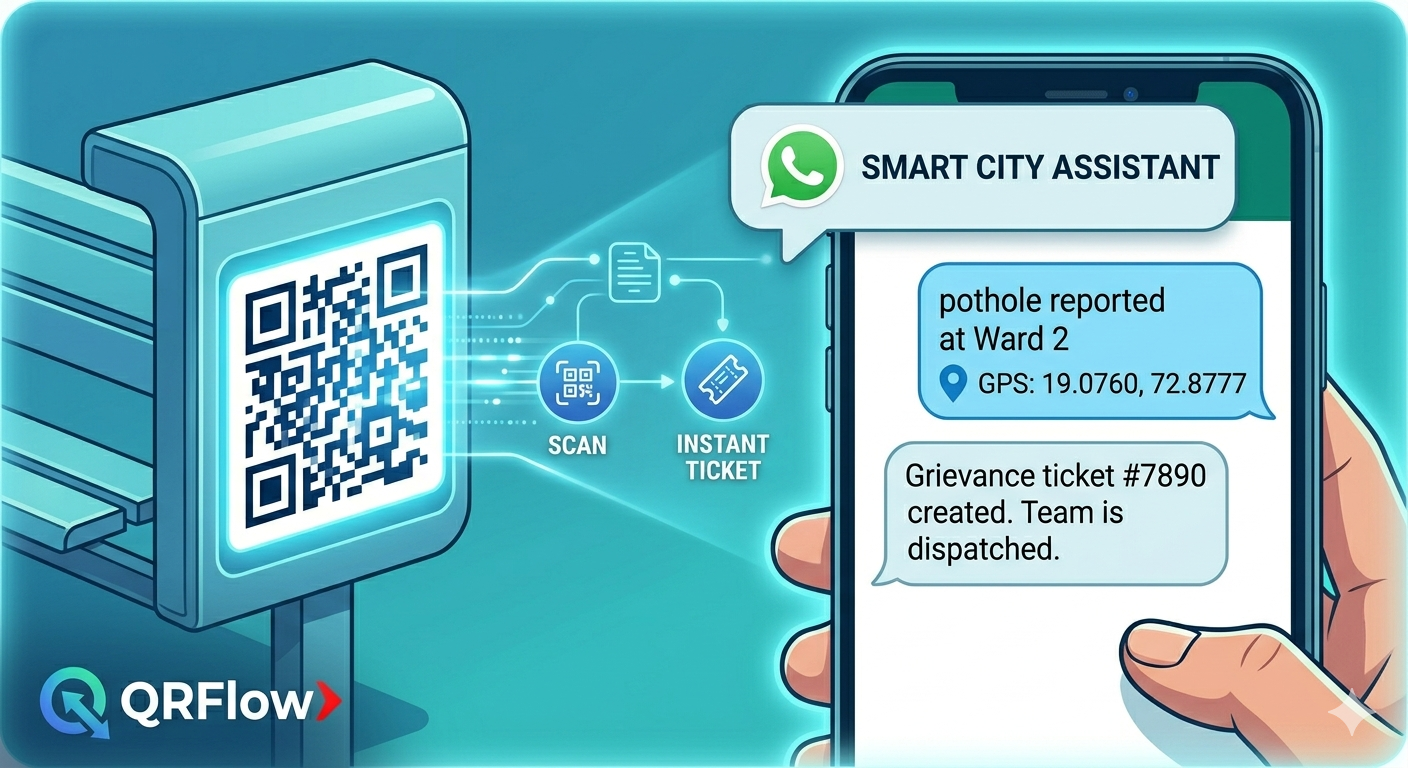
1. Unified Citizen Grievance Redressal
Place QR codes on public utility assets that link directly to the municipal WhatsApp Business API. Citizens can scan to report issues (potholes, water leaks), automatically tagging the GPS location of the scan for immediate action by the public works department.
2. Smart Transit & O2O Attribution
Deploy QR-based information panels at bus stops and metro stations. Unlike static timetables, these codes lead to live tracking APIs, ensuring commuters receive real-time data, while city planners gain insights into high-traffic transit nodes through Scan Attribution.
3. Digitized Heritage & Tourism
Enhance cultural tourism in historic cities by attaching QR codes to monuments. These can trigger multilingual audio guides or augmented reality overlays, providing deep insights while collecting data on visitor footfall patterns.
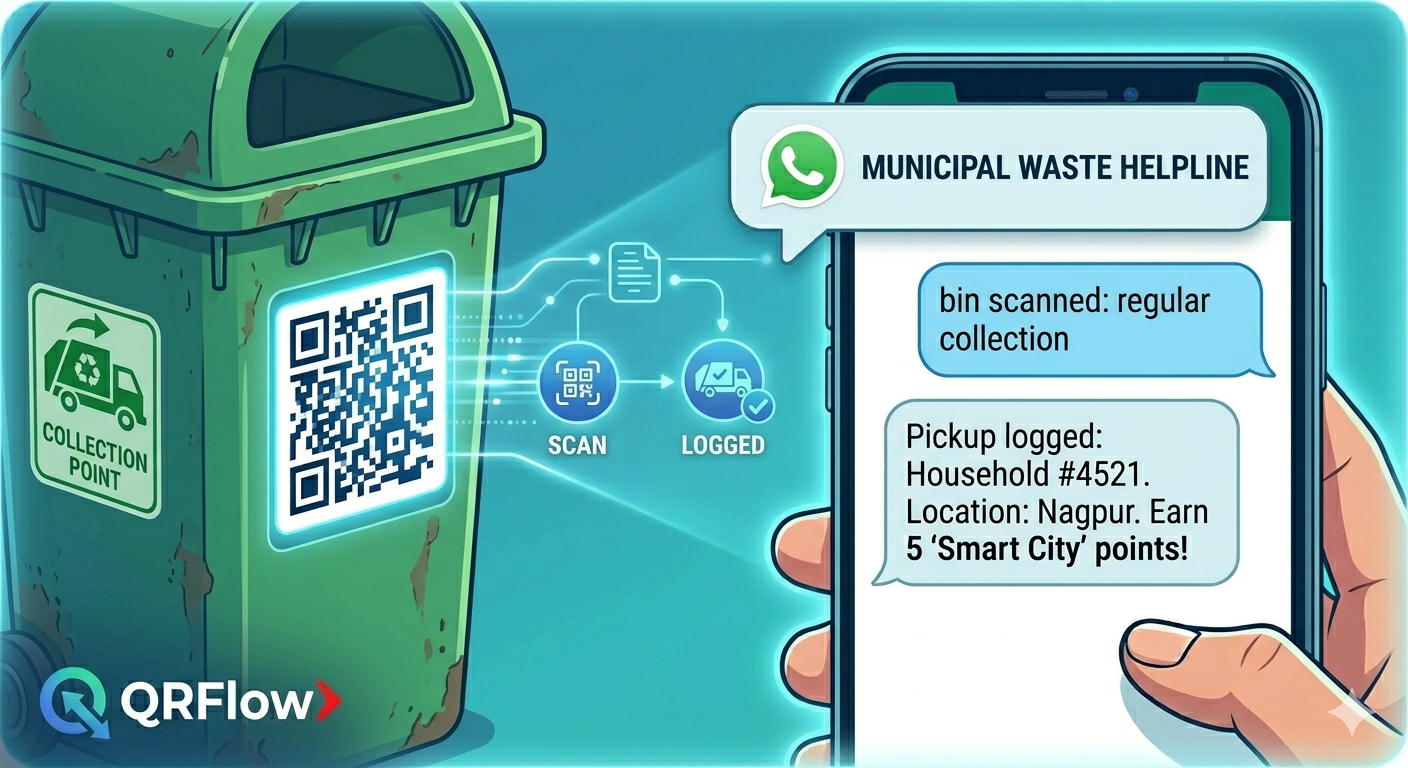
4. Efficient Waste Management Tracking
Utilize QR codes on household waste bins to track collection cycles. This system ensures accountability in local service delivery and allows for gamified recycling programs where citizens earn digital badges or subsidies.
5. Instant Emergency Response Nodes
In the event of localized flooding or urban incidents, QR codes on street lights can be updated via the QRFlow Dashboard to show real-time evacuation routes, safety protocols, and emergency contact numbers, bypassing the need for physical sign replacements.
The QRFlow Advantage: Technical Superiority
Managing city-wide infrastructure requires more than just generating images. It requires an enterprise architecture that handles high concurrency and strict security.
Latency Optimization & Edge Infrastructure
QRFlow leverages high-speed redirect servers. When a citizen scans a code, the redirect latency is minimized, ensuring the landing page loads instantly, even on congested 4G/5G networks. We use intelligent routing to ensure that the request is handled by the nearest server node.
Analytics & Data Sovereignty
In alignment with the Digital Personal Data Protection (DPDP) Act 2023, QRFlow provides granular control over data. Administrators can track device types, OS, and IP-based locations without compromising individual citizen privacy, helping city planners optimize infrastructure based on data-driven insights rather than guesswork.
Brand & Security
Unlike free, open-source generators, QRFlow’s managed redirects protect against "QR Phishing" (Quishing). By securing the redirect chain, we ensure that urban signage cannot be hijacked to redirect citizens to malicious websites.
Implementation Guide: 3 Steps to a Smarter City
- Register: Create your administrative account at https://app.qrflow.in/register.
- Design in Dashboard: Configure your dynamic QR codes. Assign specific URLs, set up deep links for mobile apps, and integrate tracking parameters for O2O attribution.
- Deploy & Track: Print your high-fidelity codes and monitor engagement through our Login portal. If you require volume enterprise licensing, contact our team for specialized support.
FAQ: Smart City Implementation
Q: Are QRFlow codes compliant with Indian data privacy laws?
A: Yes. We prioritize compliance with the DPDP Act 2023, ensuring that all data collection practices are transparent and secure.
Q: Can I change the destination of a code once it’s printed on a sign?
A: Absolutely. This is the core benefit of our dynamic system. You can update the target URL in our dashboard at any time without needing to reprint the physical QR code.
Q: How do you handle scan limits?
A: Our infrastructure is designed for enterprise scale. Please review our Pricing (INR) for information on our various tiers and scan volume thresholds.
Q: Can these codes integrate with UPI payment flows?
A: Yes. For parking fees or public amenities, we can facilitate direct integration with UPI-based payment gateways to ensure seamless, cashless transactions.
Q: How do I manage thousands of codes across a city?
A: Our platform allows for bulk creation and folder-based organization, making it easy for municipal teams to manage codes by zone, ward, or project type.