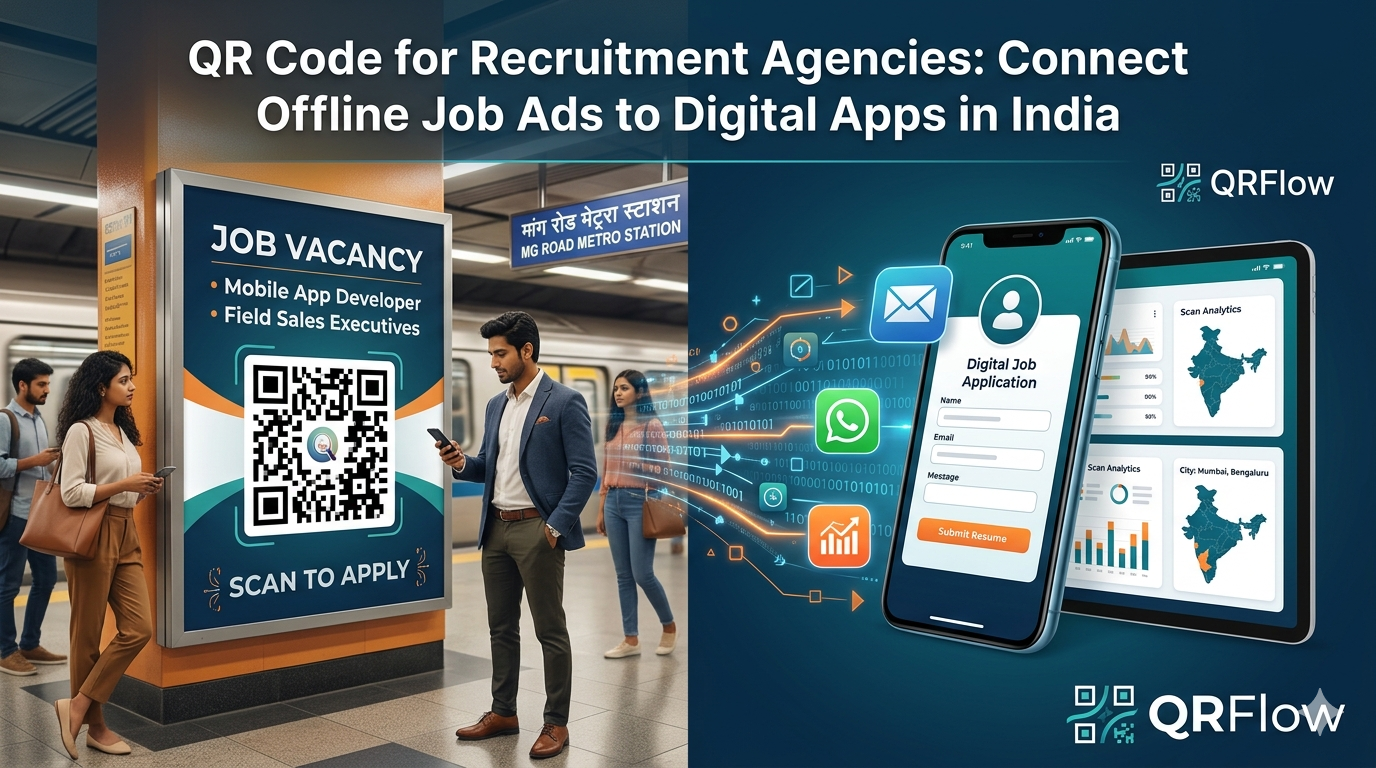
The High Cost of "Dead Links" in Indian Recruitment
In the competitive Indian labor market—from tech hiring in Bengaluru to blue-collar recruitment in Noida—the "Phygital" gap is a silent killer of ROI. Traditional print ads or physical banners often rely on printed URLs or manual phone numbers.
When a candidate sees a "dead link" (a URL they have to type manually or an expired QR code), the agency loses Scan Attribution. Without a dynamic backend, you cannot tell which physical location—be it a metro station or a college campus—is driving your high-quality talent. In the era of O2O (Offline-to-Online) Attribution, relying on static QR codes is a liability that risks your brand security and candidate experience.
Static vs. QRFlow Dynamic: The Recruitment Efficiency Matrix
| Feature | Static QR Codes (Free/Basic) | QRFlow Dynamic Solutions |
|---|---|---|
| Link Flexibility | Permanent; if the URL breaks, the print is wasted. | 301/302 Redirection; update the job link anytime without reprinting. |
| Data Security | None; users can be redirected to malicious sites. | Managed Redirects with brand-safe, low-latency infrastructure. |
| Analytics | Zero visibility on who scanned where. | Deep Scan Attribution (Device, OS, IP-based City Location). |
| Compliance | Non-compliant with data privacy norms. | Built for DPDP Act 2023 data sovereignty. |
| Lead Capture | Manual form entry only. | Integrated WhatsApp Business & UPI-flow triggers. |
7 Strategic Use Cases for Recruitment Agencies in India
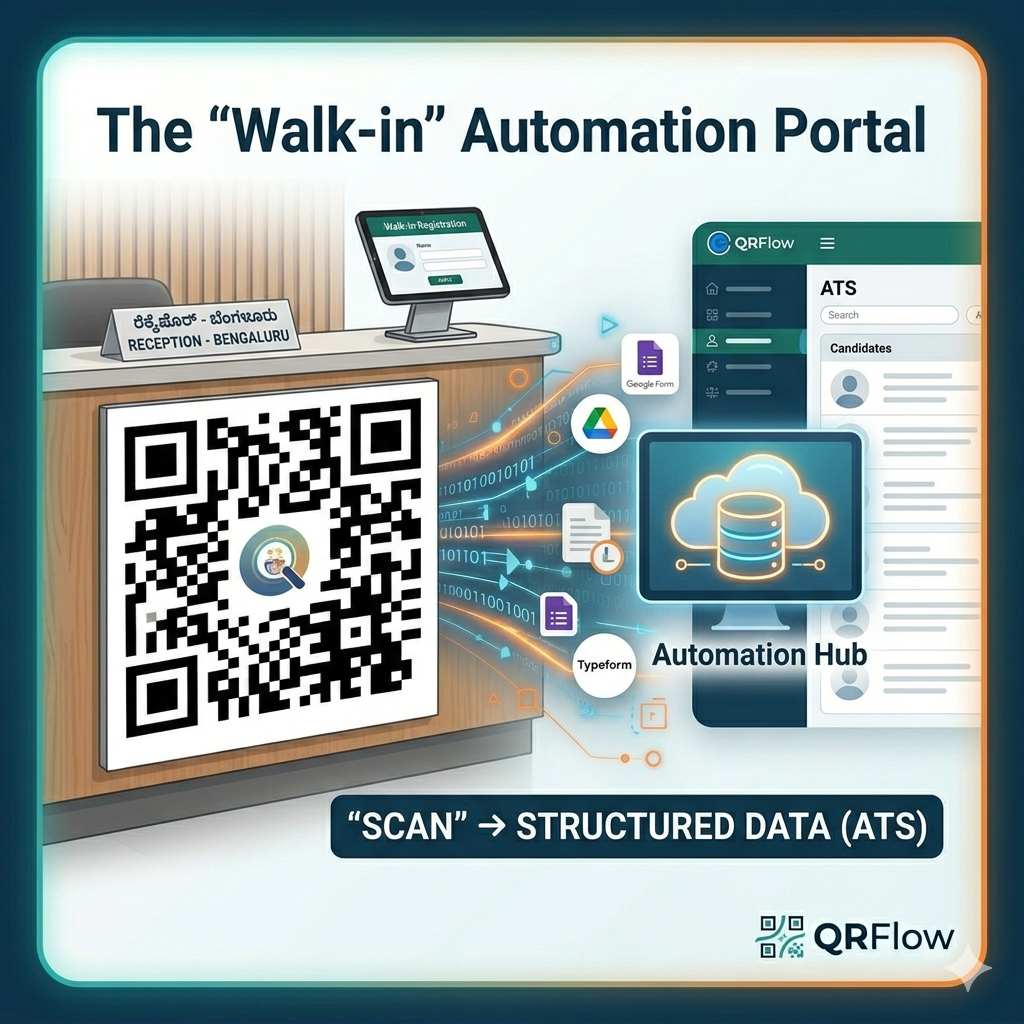
1. The "Walk-in" Automation Portal
Place QR codes at the reception of your consultancy. Instead of handing out paper forms, candidates scan to open a mobile-optimized Typeform or Google Form. This ensures data is immediately structured in your ATS (Applicant Tracking System).
2. Hyper-Local Campus Hiring
Deploy unique QR codes for different engineering colleges across India. Use QRFlow’s Location Analytics to identify which campuses are most engaged, allowing you to allocate your physical branding budget to high-intent regions.
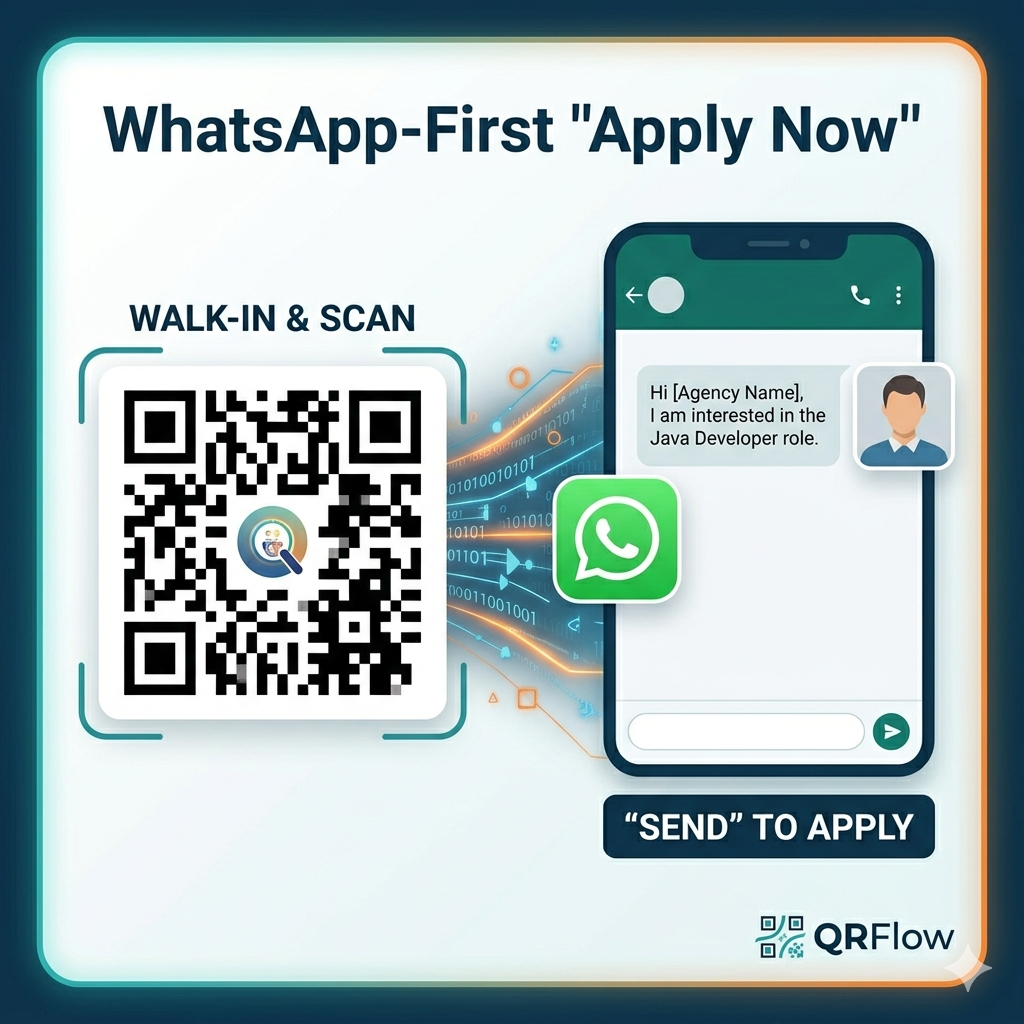
3. WhatsApp-First "Apply Now"
In India, WhatsApp is the primary communication tool. QRFlow allows you to create a QR code that triggers a pre-filled WhatsApp message: "Hi [Agency Name], I am interested in the Java Developer role." This initiates a conversational AI bot for instant screening.
4. Verified Credential Checking
Print QR codes on candidate ID badges or offer letters. Employers can scan the code to verify the authenticity of the document via a secure, managed redirect to your agency’s verification database.
5. Multilingual Job Descriptions
Indian recruitment often spans multiple languages. A single dynamic QR code can use browser-language detection to redirect a candidate to a job description in Hindi, Tamil, or Marathi, ensuring better inclusivity.
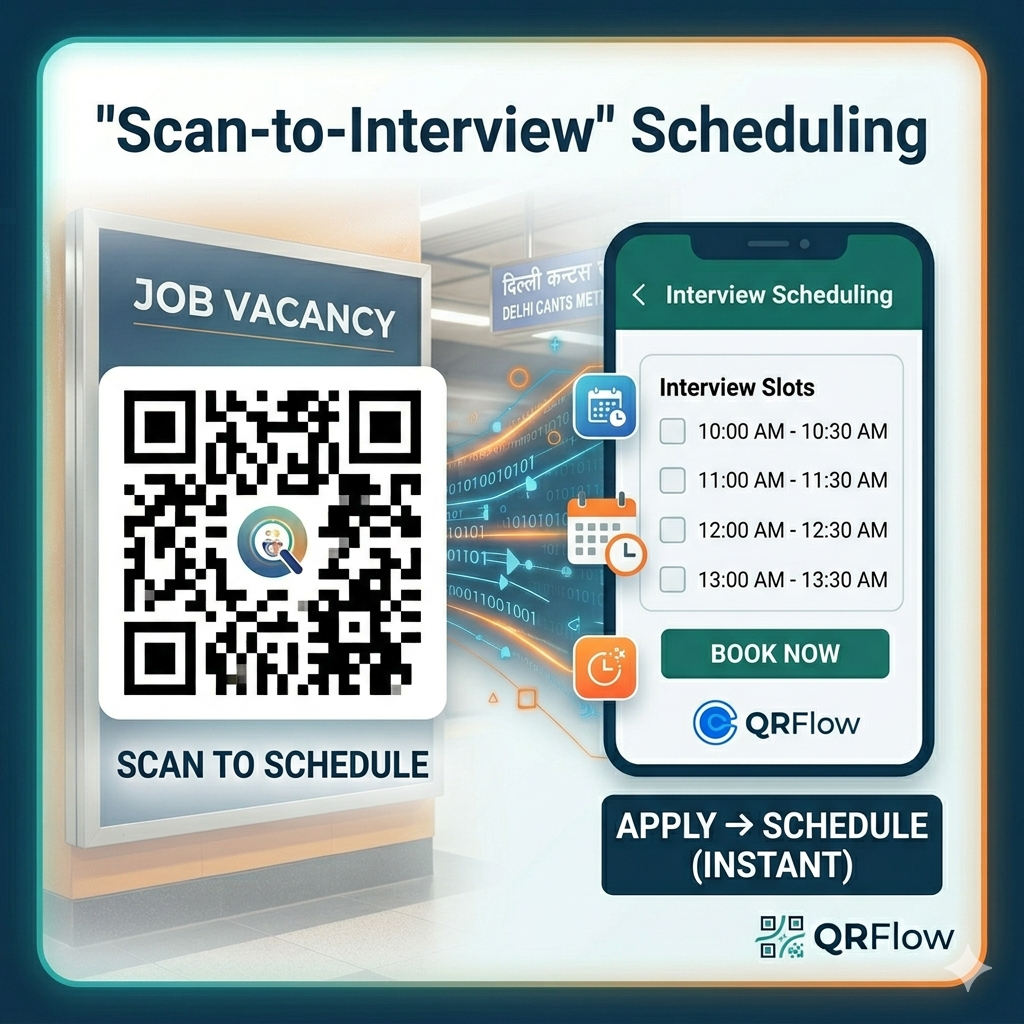
6. "Scan-to-Interview" Scheduling
Integrate your QR code with Calendly or Zoho Bookings. Candidates scanning a poster at a job fair can immediately see your recruiters' availability and book a slot, reducing the "ghosting" rate.
7. Geo-Fenced Blue Collar Recruitment
For warehouse or manufacturing roles, place QR codes on transit media (buses/trains). Use IP-based Location tracking to ensure applicants are within a commutable distance of the job site before they even fill out the form.
Technical Superiority: Why Your Infrastructure Matters
The backend of a QR code is not just a link; it is a gateway. At QRFlow.in, we prioritize Latency Optimization. In a mobile-first country like India, where 4G/5G speeds can fluctuate, a delay of 2 seconds in a redirect can lead to a 50% drop-off.
Analytics & Attribution
Our dashboard provides a granular breakdown of your recruitment campaign performance:
- Device & OS: Determine if your candidates are primarily on budget Android devices or high-end iOS, helping you optimize your app's UI/UX.
- Time-Series Data: Identify peak scanning hours to schedule your social media follow-ups.
- Brand Security: Unlike free generators that may inject third-party ads, QRFlow ensures a clean, white-labeled transition from physical to digital.
Compliance with DPDP Act 2023
With India’s new Digital Personal Data Protection (DPDP) Act, how you handle candidate data is critical. QRFlow’s architecture is designed to respect user privacy while providing the necessary analytics for business growth, ensuring your agency stays on the right side of the law.
3-Step Implementation Guide
- Register & Setup: Create your professional account at https://app.qrflow.in/register to access the central recruitment dashboard.
- Design & Dynamic Link: Customize your QR code with your agency’s logo and brand colors. Input your job application URL (you can change this URL later without changing the QR code).
- Track & Optimize: Monitor scans in real-time via the Login portal. Use the data to refine your physical placement strategy and maximize your Pricing (INR) efficiency.
India Business FAQ: Recruitment Edition
Q: Is there a limit on how many scans a QR code can handle?
A: Unlike free tools that "kill" a link after 100 scans, QRFlow’s professional plans offer high-volume scan limits suitable for nationwide Indian recruitment drives. Check our Pricing for details.
Q: Do you provide GST-compliant invoices?
A: Yes, as an Indian-focused platform, we provide full GST invoices for all corporate accounts to ensure your tax compliance is seamless.
Q: Can I integrate the QR code with my existing ATS like Zoho Recruit or Workable?
A: Absolutely. By using a dynamic redirect, you can point the QR code to any web-based ATS portal or use Zapier to bridge the data.
Q: How do I know if someone scanned the code in Mumbai vs. Delhi?
A: Our IP-based Location Analytics provides city-level data, allowing you to see exactly where your applicants are coming from.
Q: What happens if I want to stop a recruitment drive early?
A: You can "Pause" the redirect or point it to a "Positions Filled" page instantly from your dashboard, preventing candidate frustration.