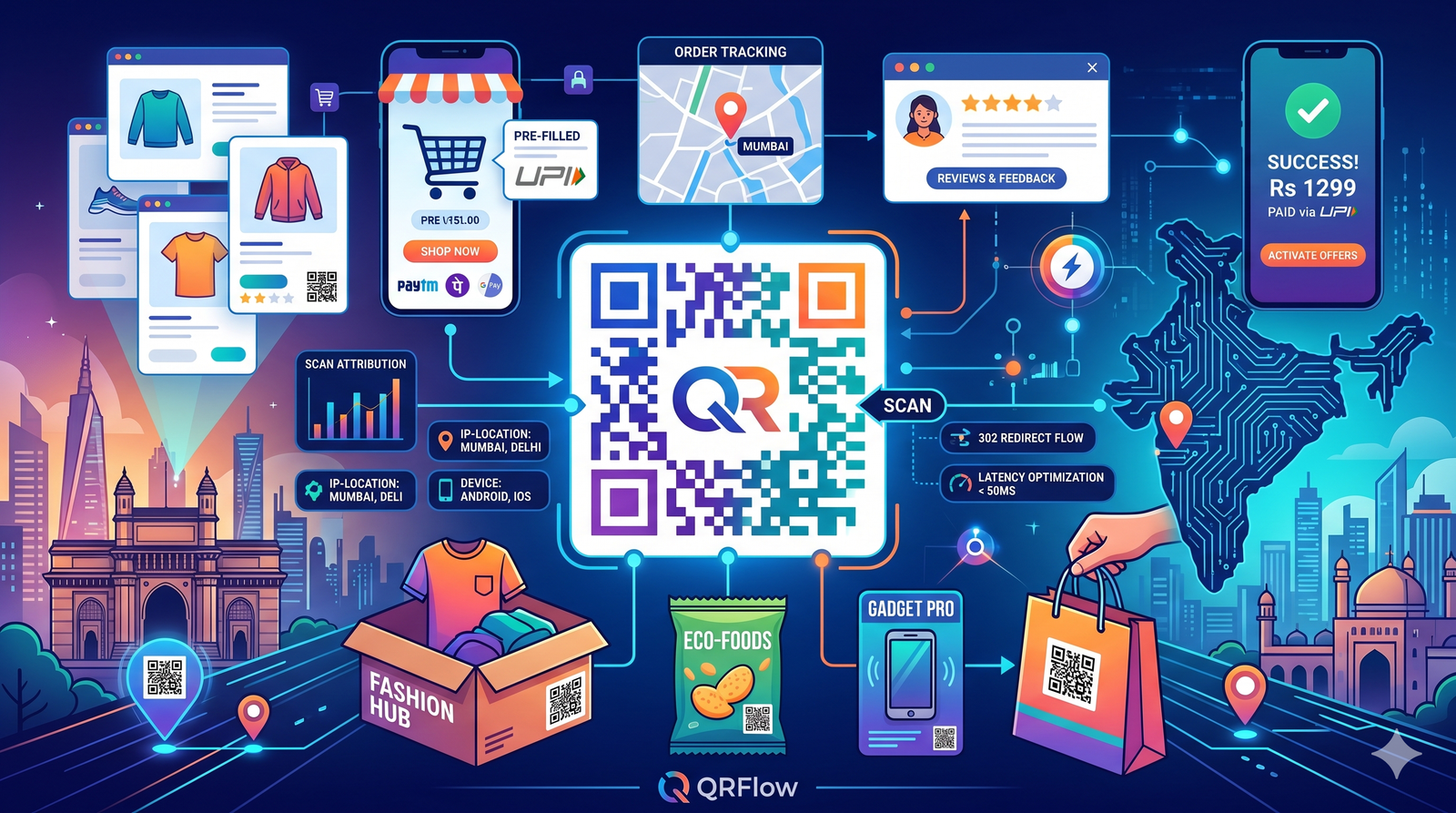
In the fast-paced Indian market, the journey from Phygital (Physical to Digital) often breaks at the most critical point: the product packaging. Millions of rupees are spent on high-quality printing, yet most brands use static QR codes.
If your seasonal campaign ends or a URL changes, that printed code becomes a "Dead Link," leading to a 404 error and a lost customer. For a growing D2C brand in India, this isn't just a technical glitch—it’s a permanent loss of O2O (Offline-to-Online) attribution data and brand trust. QRFlow eliminates this risk by using high-speed managed redirects, allowing you to change the destination URL even after the product has reached the customer's home.
Static vs. QRFlow Dynamic: The E-Commerce Comparison
| Feature | Static QR Codes (Generic) | QRFlow Dynamic QR Codes |
|---|---|---|
| URL Flexibility | Permanent. Cannot be changed. | Unlimited Updates via 301/302 redirects. |
| Scan Attribution | Zero data on who scanned or where. | Deep Analytics (Device, OS, City, Time). |
| Branding | Standard "box" look; high error rates. | Custom Design with Logo & Brand Colors. |
| Scalability | Manual generation for each SKU. | Bulk Generation via API for 10,000+ SKUs. |
| Security | Susceptible to "Quishing" (Phishing). | Secure Backend with Latency Optimization. |
7 Deep-Dive Use Cases for the Indian E-Commerce Ecosystem
1. Smart Product Packaging & Re-Ordering
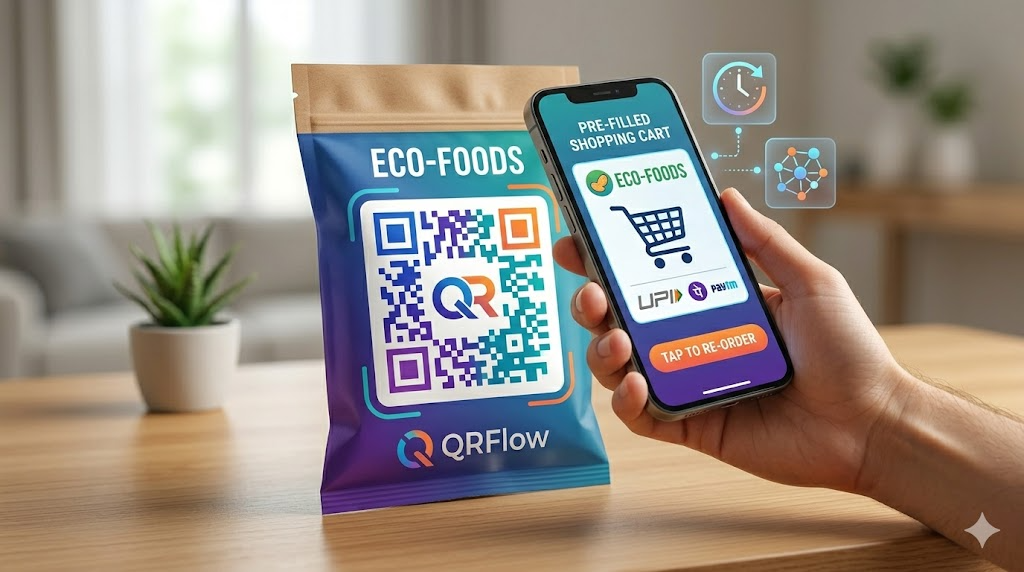
Include a QR code on the primary packaging that leads directly to a pre-filled Shopify or WooCommerce cart. In India, where "convenience is king," allowing a customer to re-order their favorite shampoo or snack with a single scan significantly boosts LTV (Lifetime Value).
2. WhatsApp Business Integration for Support
Indians prefer communicating via WhatsApp over email. By embedding a WhatsApp-trigger QR code on your "Thank You" card, you can initiate a chat with your support team instantly. QRFlow allows you to track which product batch triggered the most support scans, providing invaluable QA data.
3. UPI-Powered Direct Checkout
Streamline the "Cash on Delivery" to "Digital Prepays" transition. Generate QR codes that trigger UPI deep-links (GPay, PhonePe, Paytm), allowing customers to pay for invoices or upgrade subscriptions instantly without typing a single digit.
4. Interactive User Manuals & Video Guides
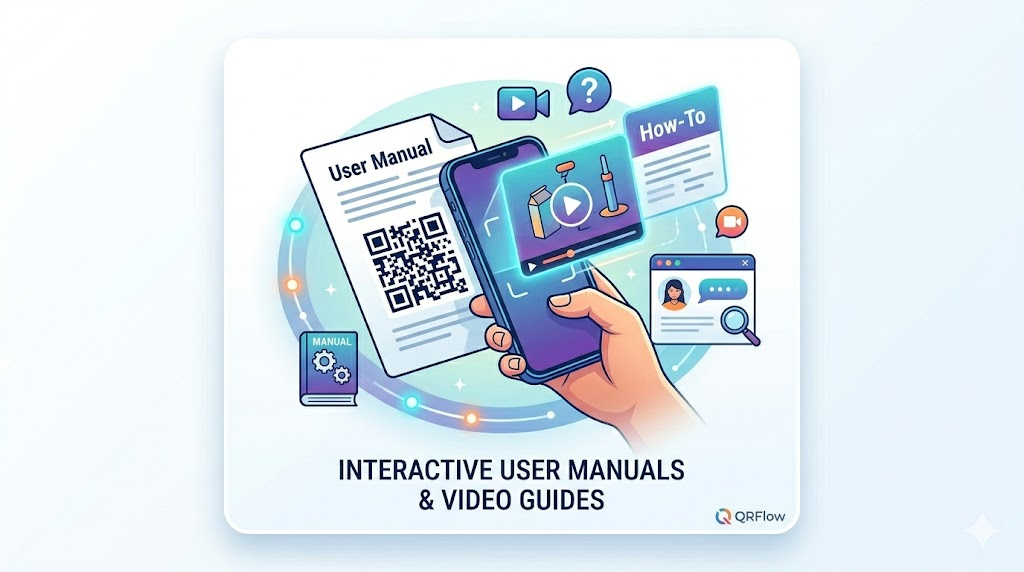
Replace bulky, expensive paper manuals with a single "How-to-Use" QR code. Link it to a YouTube video or a hosted PDF. Since it's dynamic, you can update the instruction video if the product version changes, without reprinting the box.
5. Review Incentivization & O2O Attribution
Drive "Verified Purchase" reviews on Amazon, Flipkart, or your own website. By using QRFlow’s Scan Attribution, you can identify which offline marketing channel (e.g., a flyer in a Mumbai delivery vs. a billboard in Delhi) is driving the most digital engagement.
6. Geofenced Seasonal Campaigns
Running a flash sale only for Bangalore customers? QRFlow’s IP-based location tracking allows you to redirect users to different landing pages based on their geographic location, ensuring hyper-local relevance.
7. DPDP Act Compliant Data Collection
With the Digital Personal Data Protection (DPDP) Act 2023, Indian brands must be transparent about data. QRFlow provides a secure middle-ware that ensures user privacy while giving you the aggregate data needed to optimize your marketing spend.
Technical Superiority: Why Your Backend Matters
Most free QR generators use low-tier servers that result in high Latency. In E-commerce, a 3-second delay in loading a page results in a 40% drop-off.
- Latency Optimization: QRFlow utilizes global edge servers to ensure the redirect happens in milliseconds.
- GS1 Standards: Our architecture supports GS1-compliant data structures, preparing your brand for the global transition from traditional barcodes to 2D QR codes.
- Security & Redirection: We use managed 301 (Permanent) and 302 (Temporary) redirects. This ensures that search engines recognize your link equity while giving you the flexibility to pivot your marketing strategy instantly.
Implementation Guide: 3 Steps to Phygital Success
- Register & Setup: Create your professional account at https://app.qrflow.in/register and access your centralized dashboard.
- Design & Customize: Visit the Features section to use our advanced designer. Add your brand logo, choose your "Quiet Zone" parameters, and select "Dynamic" to ensure your link never expires.
- Deploy & Track: Print your codes on packaging. Use the Login portal to monitor real-time analytics. Adjust destination URLs based on stock availability or campaign performance.
FAQs
Q1: Does QRFlow support GST Invoicing for Indian Businesses? Yes. All Pricing plans for Indian entities include GST-compliant invoices so you can claim Input Tax Credit (ITC).
Q2: Is there a limit on the number of scans? Unlike "free" tools that stop working after 100 scans, QRFlow offers scalable plans designed for high-volume e-commerce requirements, ensuring your codes work whether you have 10 scans or 10 million.
Q3: How does QRFlow handle data privacy in India? We are fully aligned with the DPDP Act 2023. We provide IP-based location data without compromising individual user identity, keeping your brand legally compliant and ethically sound.
Q4: Can I change the URL after the QR code is printed on 50,000 boxes? Absolutely. That is the power of a Dynamic QR Code. You can log into your dashboard and update the destination link at any time, and it updates instantly globally.
Q5: How can I contact support for bulk API integration? For enterprise-level integrations or bulk SKU generation, please visit our Contact Page to speak with a solution architect.