For Indian transit systems, logistics networks, and urban mobility platforms, physical marketing touchpoints—like in-cab seatback stickers, delivery fleet wraps, and driver dashboard placards—represent a massive bridge to digital conversion. However, relying on traditional, unmanaged static QR codes introduces systemic operational vulnerabilities that directly impact top-line revenue and brand authority.
The core vulnerability lies in the absolute rigidity of static formatting: once printed on thousands of vehicle decals across states like Maharashtra, Karnataka, or Delhi, the embedded destination URL cannot be changed. If an internal landing page structure updates, a domain transitions, or a marketing campaign concludes, those physical deployments instantly become dead links. In the context of on-the-road assets, replacing physical collateral implies staggering vehicle downtime, printing costs, and manual maintenance logistics across distributed hubs.
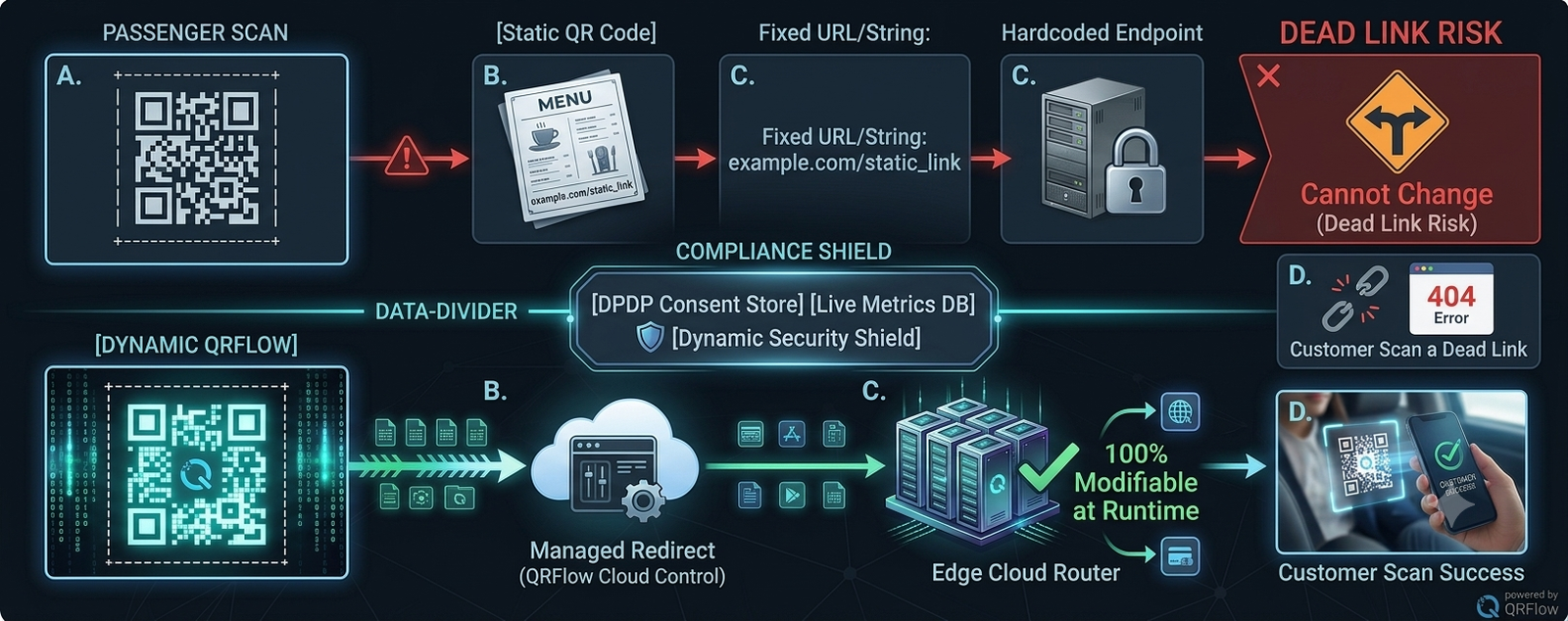
Worse yet, static print media is highly susceptible to QR phishing (Quishing) and physical tampering. Malicious actors can easily print counterfeit sticky overlays and place them over a vehicle’s legitimate payment or feedback code. Because unmanaged infrastructure lacks intermediate validation, unsuspecting passengers or supply chain partners are routed directly to lookalike phishing domains or unauthorized private UPI Virtual Payment Addresses (VPAs).
This structural flaw causes severe attribution blindspots, exposes operators to immense financial liability under national consumer protection frameworks, and destroys customer trust. Enterprise fleet operators require centralized cryptographic control over every pixel printed on their physical capital.
Technical Comparison: Static Codes vs. QRFlow Enterprise Infrastructure
To protect digital workflows operating across high-velocity transit environments, infrastructure architects must replace raw, static data dumps with dynamic routing layers.
| Technical Parameter | Static QR Codes | QRFlow Enterprise Dynamic Infrastructure |
|---|---|---|
| URL Modification | Impossible post-printing; requires absolute media replacement. | 100% mutable in real-time via standard HTTP 301/302 Redirection control. |
| Data Payload Density | Heavy, dense pixel grid; difficult for low-cost smartphone cameras to read in low light. | Ultralight, low-density data matrix optimized for rapid scanner focus under moving conditions. |
| Scan Attribution & Analytics | Zero native tracking; requires external, fragile tracking parameters. | Full programmatic Scan Attribution (Device, OS, ISP, and IP-based regional location). |
| Security Architecture | Non-existent; open to direct interception, destination spoofing, and sticky overlays. | Managed short-link architecture with integrated destination white-listing and SSL enforcement. |
| Indian Regulatory Compliance | Zero control over data residency or tracking variables. | Fully compliant with the Digital Personal Data Protection (DPDP) Act 2023. |
| Payment Integration | Hardcoded, rigid strings prone to syntax failures across different bank applications. | Programmable, dynamic UPI Deep-Links with intelligent intent-string resolution. |
5 Deep-Dive Use Cases for the Indian Mobility Ecosystem
1. In-Cab Cashless Payments via Dynamic UPI Deep-Links
Traditional static UPI QR codes pasted on cab dashboards force the passenger to scan, manually input the fare balance announced by the driver, and wait for verbal confirmation. This process introduces human error and creates dangerous exit-delays at busy drop-off zones like terminal exits at Mumbai T2 or Bangalore KIA.
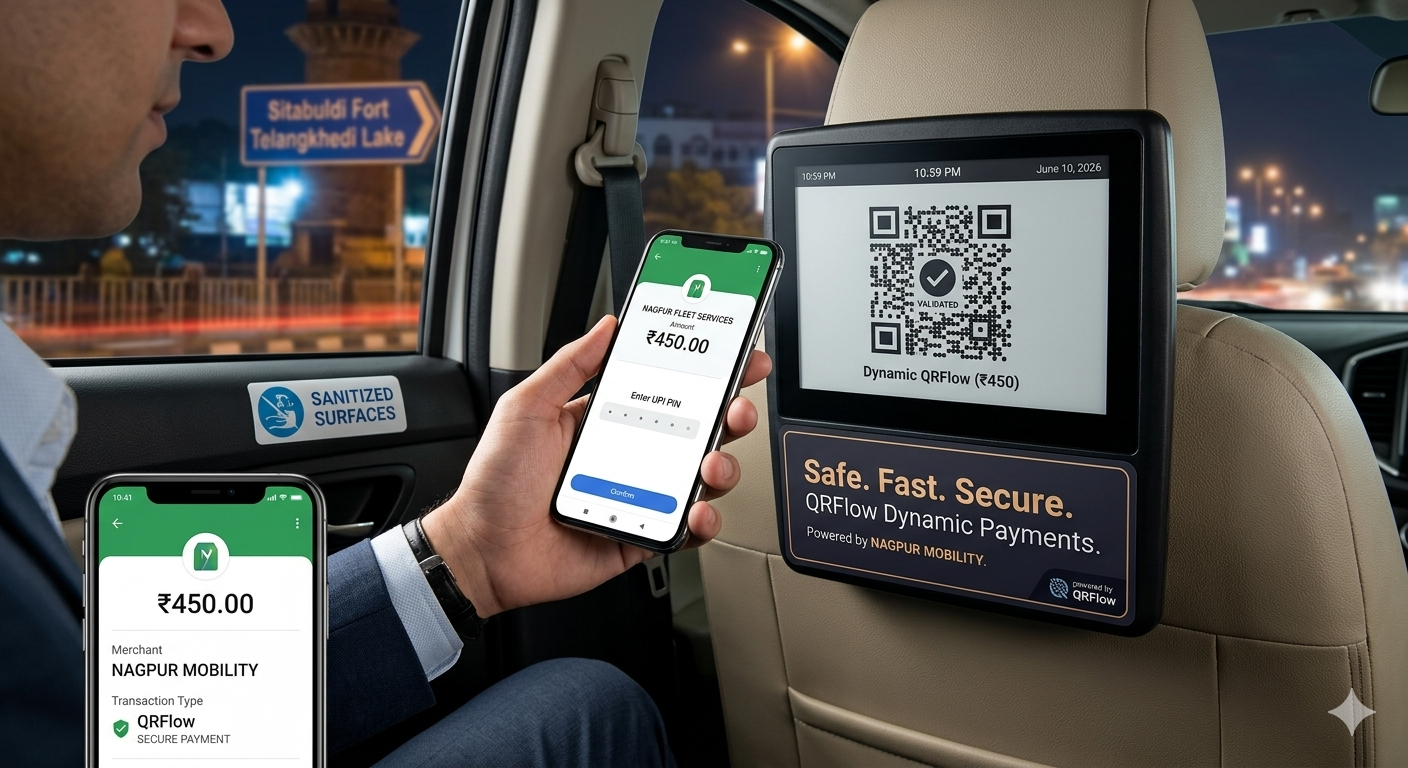
By deploying QRFlow dynamic infrastructure linked to the vehicle's digital fare meter, the system generates a dynamic transaction payload on an electronic ink display or dedicated passenger-facing console.
When scanned, this executes a precise UPI Deep-Link (upi://pay?pa=fleetcorp@bank&am=450.00&tr=TXN98231&cu=INR). This string triggers a native payment intent window on the passenger's smartphone, instantly opening their preferred application (e.g., Google Pay, PhonePe, or Paytm) with the exact fare amount, transaction ID, and corporate merchant VPA completely pre-filled. The passenger simply enters their secure UPI PIN to execute a 100% accurate, frictionless payment within seconds.
2. Instant App Onboarding via Low-Latency O2O Play Store Routing
On-demand bike-taxi and auto-rickshaw aggregators lose thousands of potential app installations daily due to high friction during offline-to-online onboarding. A single, static QR wrapper cannot differentiate between user environments.
QRFlow’s cloud-native architecture acts as an intelligent O2O Attribution node. When a commuter waiting at a metro station scans a seatback wrap, our edge network conducts a split-second device analysis.
An Android user is instantly routed via a clean, zero-latency 302 redirect to the Google Play Store, while an iOS user lands directly on the Apple App Store. The system simultaneously captures downstream channel attribution data, allowing marketing teams to precisely map performance across specific vehicle types, geographic corridors, and city clusters.
3. Dynamic Driver Verification and Compliance Mapping
Operating thousands of commercial vehicles across multiple shifts introduces massive compliance headaches regarding driver identity validation, commercial permits, and active vehicle fitness certificates.
By printing a single, dedicated QRFlow dynamic identifier directly onto the vehicle’s windshield or dashboard layout, operators establish an active compliance portal.

When a passenger scans the badge, the system pulls live scheduling data from the central human resource engine. The dynamic link resolves to a secure, localized web portal displaying the current driver’s verified commercial profile, active driving license status, rating metrics, and a direct one-tap digital helpdesk line. If a vehicle changes shifts or a new driver takes over, the backend database maps the new credentials to the exact same physical QR asset without modifying the printed collateral.
4. Direct WhatsApp Business Automation for Instant Support
In the highly fragmented Indian transit sector, getting immediate roadside assistance, registering lost-and-found requests, or filing safety escalations via complex IVR phone trees can be incredibly frustrating for users.
By embedding dynamic, pre-configured WhatsApp click-to-chat links into in-transit QR placements, fleet operators can instantly connect passengers to their automated support eco-system.
Scanning the code launches the native WhatsApp client on the passenger's phone, opening a direct message thread with the operator’s verified WhatsApp Business Integration account. The message input field is automatically populated with a structured, parameterized text block containing contextual data, such as:
"Hi FleetSupport, I need assistance regarding my current journey in Vehicle ID: MH-12-QW-8932."
This structured payload allows automated conversational AI bots to instantly triage the request, route the ticket to the correct regional hub, and resolve the passenger's query without requiring tedious manual data entry.
5. Multilingual Digital Luggage and Parcel Consignment Tracking
For interstate logistics and express document delivery providers across India, ensuring robust end-to-end chain of custody data is a core operational requirement. Traditional tracking labels often fail when cargo transitions between diverse regional teams who speak different languages.
By incorporating QRFlow dynamic labels on transit consignments, field agents can scan the asset using any standard smartphone to open a localized operational ledger.
The underlying architecture auto-detects the agent's browser language configuration and dynamically serves the tracking sheet interface in Hindi, Tamil, Telugu, Marathi, or English. Field operators can rapidly update waypoint timestamps, upload delivery photographs, log fuel stop parameters, or record digital signatures directly to the cloud without needing to install complex, proprietary enterprise software on local devices.
Technical Superiority of the QRFlow Enterprise Backend
Core Infrastructure Architecture
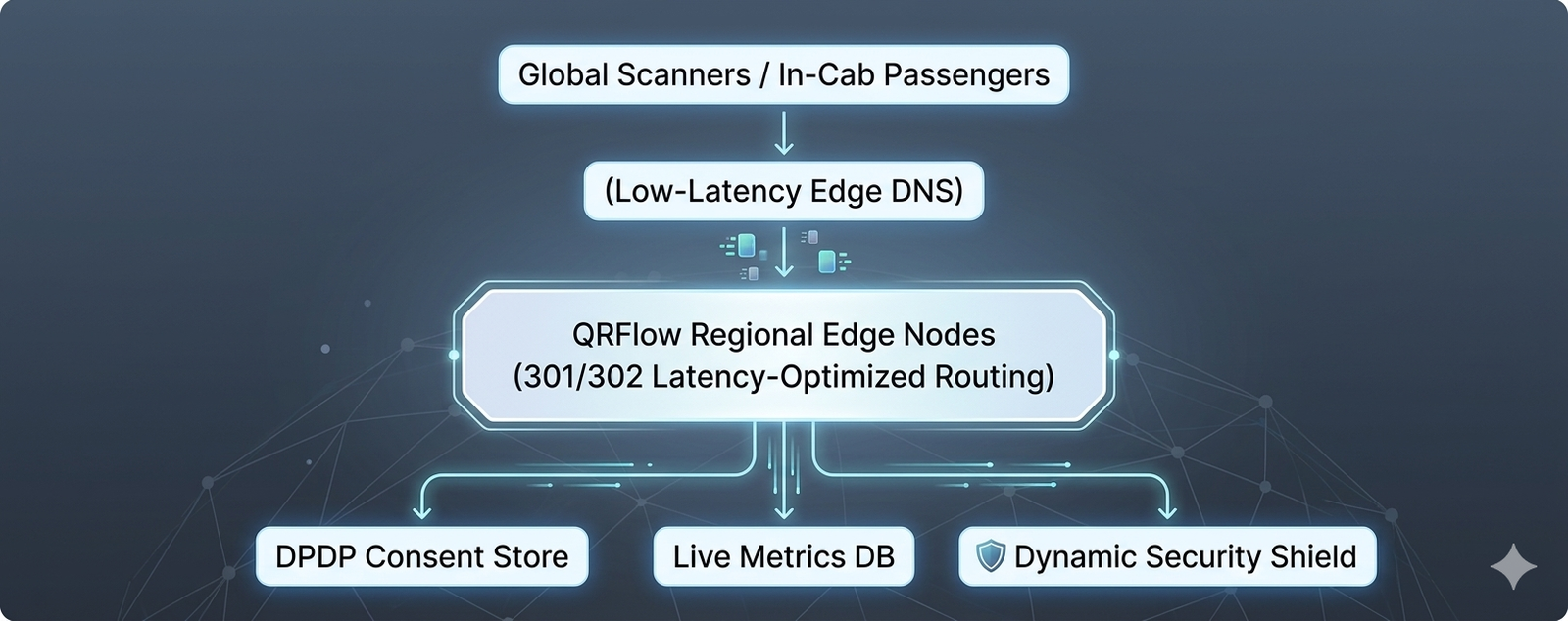
Free, unmanaged online generator services output bloated, non-optimized static blocks that degrade significantly under everyday wear-and-tear, dirt, and scratches. QRFlow utilizes an industry-grade distributed edge architecture designed specifically for high-availability corporate operations.
1. Advanced Scan Attribution & Analytics
Every scan handled by the QRFlow routing layer executes inside an isolated, highly performant container. The engine extracts real-time, granular Scan Attribution metrics without relying on invasive tracking cookies:
- Device Profiling: Analyzes user-agent signatures to determine hardware brand, model category, and browser type.
- OS Intelligence: Identifies the precise operating system layout (e.g., Android, iOS, Windows Mobile) to execute correct app-store or deep-link parsing.
- IP-Based Regional Location Mapping: Uses localized network triangulation to pinpoint the city, state, and telecommunications provider (e.g., Jio, Airtel, Vodafone Idea) handling the data stream, providing precise spatial mapping of marketing assets.
2. Real-Time Latency Optimization
In high-velocity transit environments, poor network connectivity can lead to dropped connections and lost customers. QRFlow addresses this issue by deploying all dynamic paths onto global edge-routing networks. Our redirect architecture handles requested URLs at the closest regional point-of-presence (PoP), lowering total request processing time to under 45 milliseconds. This aggressive Latency Optimization prevents the frustrating blank loading screens common with free, unmanaged redirect tools.
3. Comprehensive Data Governance and DPDP Act 2023 Compliance
With the enforcement of India's Digital Personal Data Protection (DPDP) Act 2023, processing user data within Indian territory requires strict data governance. QRFlow is built from the ground up around data minimization principles:
- No PII Collection: All IP network addresses undergo immediate hash-anonymization at the edge layer; no unencrypted personally identifiable information (PII) is ever written to disk.
- Sovereign Cloud Infrastructure: All transaction ledgers, analytics matrices, and target endpoints are stored on secure enterprise clouds within India's borders.
- Consent-First Architecture: The redirect layer supports automated consent verification parameters, ensuring clean data governance and protection from international regulatory liabilities.
Step-by-Step Enterprise Implementation Guide
Deploying secure, high-performance tracking and payment codes across an enterprise logistics or transport network requires careful attention to system architecture. Follow this streamlined three-step workflow to go live:
Step 1: Secure Enterprise Account Registration
Begin by setting up an authorized corporate account on the primary platform. Navigate directly to the QRFlow Sign-Up Portal to configure your company profile. If your team already has active credentials, authenticate directly through the centralized QRFlow Login Interface. This administrative access gives you full control over your dynamic routing profiles, custom domain assignments, and security monitoring features.
Step 2: Dynamic Customization and Branding Matrix
Once inside the system management console, explore the comprehensive feature set outlined in the QRFlow Technical Features Repository. Generate a new dynamic asset and configure your branding parameters:
- Establish custom short URLs utilizing your company’s unique domain structure to ensure consistent branding and end-to-end security.
- Customize visual designs by integrating high-contrast brand marks and optimizing error-correction layers (up to 30%) to ensure clean scans even on moving vehicles or under poor lighting conditions.
- Embed your target destinations, such as direct application deep-links, dynamic UPI intent strings, or automated messaging channels.
Step 3: Deployment Tracking and Financial Optimization
Before moving forward with large-scale printing runs on vehicle wraps or print media, review the enterprise tier structures at the QRFlow Live Pricing Guide. Once your dynamic assets are deployed in the field, use the main system dashboard to track real-time performance. Monitor scan velocities, analyze device distribution trends, and adjust destination URLs instantly as your operational requirements evolve—without ever needing to reprint a single piece of physical media.
India-Centric Mobility Operations FAQ
Q1: Is there a hard restriction on the total number of scans our dynamic codes can process during peak operations?
No. Unlike free tools that impose hidden monthly scan limits or redirect restrictions, QRFlow’s enterprise-tier infrastructure provides unlimited scan processing capacity. The platform routinely manages high-volume distribution campaigns across major regional networks without any risk of overage charges or sudden service suspensions.
Q2: How does QRFlow ensure compliance with India’s strict GST billing regulations?
All commercial transactions and subscriptions processed through our platform fully include a valid tax invoice structure. When completing your profile setup, enter your company's official Corporate GSTIN to automatically generate compliant invoices with appropriate CGST, SGST, or IGST tax breakdowns for your corporate accounting records.
Q3: What happens if a bad actor covers an official vehicle code with a fake sticky overlay?
While no software platform can physically prevent manual tampering with print media, QRFlow provides tools to mitigate this risk. By routing all traffic through your own branded short domains (e.g., qr.yourbrand.com), users can easily verify the legitimacy of the link within their scanner preview before opening the page. Additionally, any structural change in scan patterns across a vehicle cluster triggers automatic velocity alerts in the dashboard, helping field audit teams quickly spot potential tampering.
Q4: Can we integrate our existing analytics pipelines directly with the QRFlow platform?
Yes. Our system architecture supports clean integration with standard enterprise data stacks. You can configure automated webhooks to pipe scan attribution datasets—such as device types, OS profiles, and localized network metadata—directly into your internal business intelligence tools or customer relationship management platforms.
Q5: If our internal engineering team needs custom technical assistance during deployment, how can we reach your team?
We provide dedicated technical support for all enterprise deployments. For custom integrations, API configuration help, or complex webhook architectures, contact our systems engineering team directly through the QRFlow Official Support Channel to schedule a dedicated technical review session.