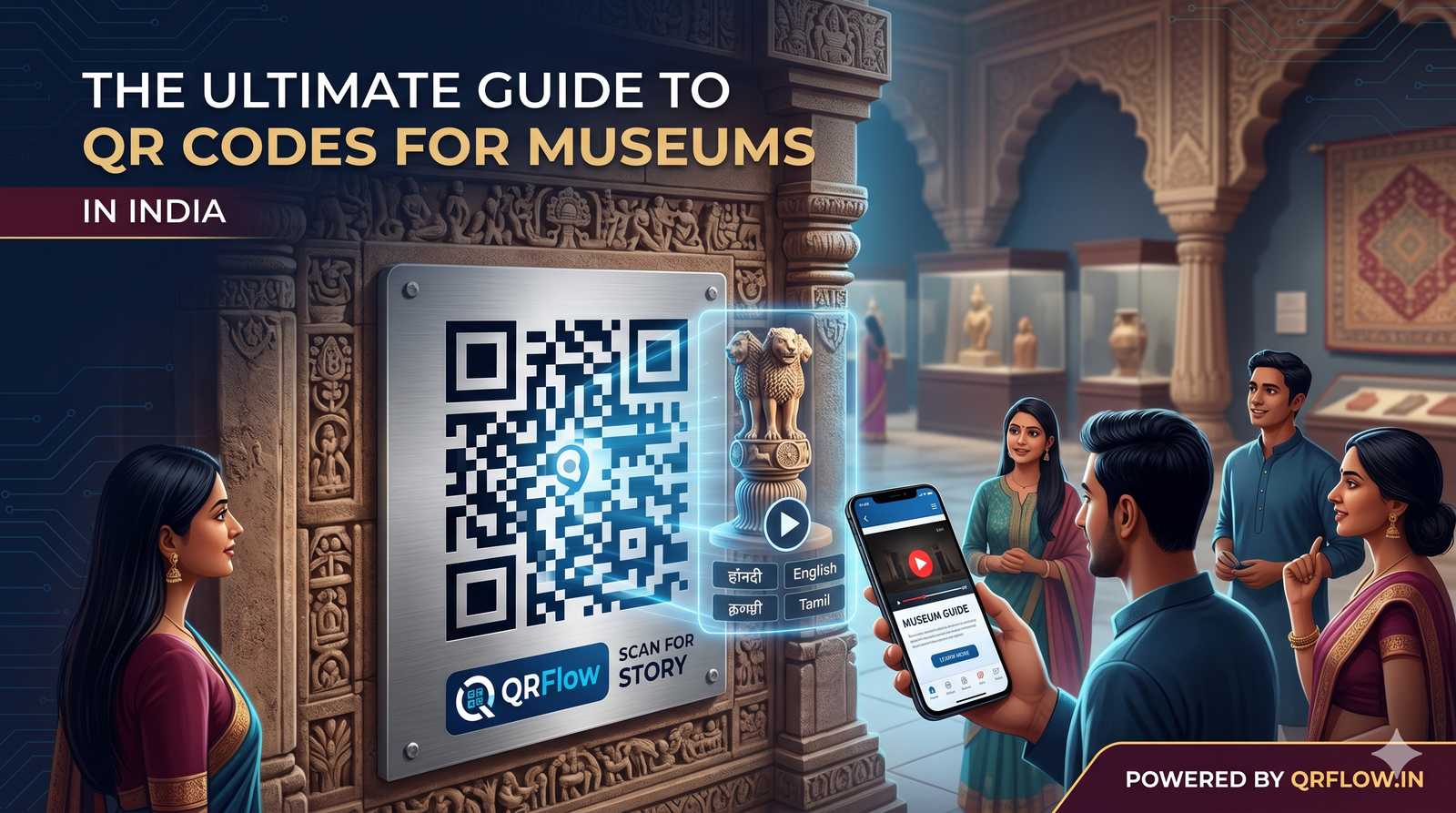
Indian museums are shifting from passive viewing to interactive storytelling. This guide explores how Dynamic QR Codes allow curators to update exhibit content instantly without reprinting expensive brass or acrylic plaques, ensuring a seamless experience for visitors from Mumbai to Mysore.
1. The "Broken Link" Disaster: Why Static QRs are Ruining Exhibit ROI
Imagine a high-profile inauguration at a museum in New Delhi. The Ministry of Culture is present, and hundreds of visitors are scanning a QR code on a ₹5,000 etched brass plaque to hear an audio guide.
The link leads to a "404 Not Found" error because the YouTube video was moved or the website was updated. To fix this with a Static QR, the museum must unscrew the plaque, re-order it, and wait 10 days for a replacement.
In the Indian context, this isn't just a technical glitch; it's a loss of institutional prestige. Dynamic QR codes solve this by decoupling the physical code from the digital destination.
2. Static vs. Dynamic: The Curatorial Comparison
| Feature | Static QR Codes (The "Old" Way) | Dynamic QR Codes (The QRFlow Way) |
|---|---|---|
| Editing | Impossible. Fixed for life. | Change URL/Content anytime. |
| Cost | High. Requires reprinting if errors occur. | Low. Update digitally in 10 seconds. |
| Analytics | None. You are blind to visitor data. | Track scans by City, Device, and Time. |
| Scanning Speed | Slower as data density increases. | Faster (Uses short URLs). |
| Institutional Control | Zero. Anyone can generate them. | Centralized dashboard for the whole museum. |
Pro-Tip: Always use Dynamic QRs for temporary exhibitions (like those during the Kochi-Muziris Biennale) where content might be updated weekly.
3. 6 Advanced Use Cases for the Modern Indian Museum
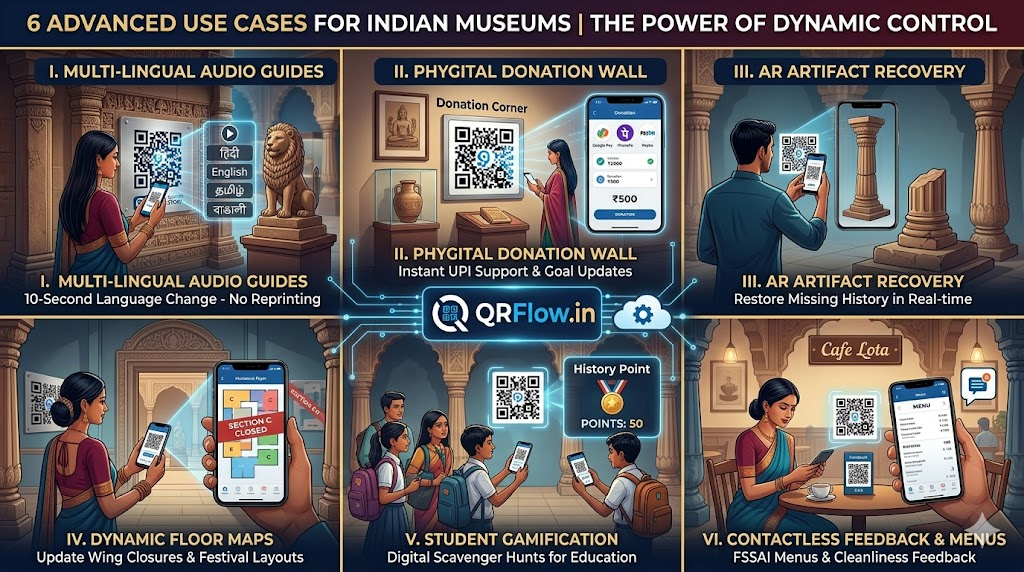
I. Multi-Lingual Audio Guides (Digital India Initiative)
Instead of renting out expensive, unhygienic audio devices, place a QR code by each artifact. Visitors scan and choose their language—Hindi, English, Tamil, or Bengali. This supports the Bhashini mission of breaking language barriers.
II. The "Phygital" Donation Wall
Move beyond the dusty wooden donation box. A Dynamic QR code linked to a UPI gateway allows visitors to contribute via GPay or PhonePe instantly. With QRFlow Features, you can change the "Campaign Goal" link without changing the QR on the wall.
III. Augmented Reality (AR) Artifact Recovery
For broken sculptures or missing parts of Indian history, a QR code can trigger an AR filter on the visitor’s smartphone, showing how the artifact looked in its original 12th-century glory.
IV. Dynamic Floor Maps
Museum layouts change during "Big Billion Days" or festive seasons. A single QR code at the entrance can lead to a PDF map that you update in the QRFlow Dashboard whenever a wing is closed for renovation.
V. Student Engagement & Gamification
Create a "Digital Scavenger Hunt." Students scan QRs hidden around the museum to collect "History Points." The data collected helps museums report engagement metrics to governing bodies like NASSCOM or the Ministry.
VI. Contactless Feedback & FSSAI Menus
If your museum has a canteen (Cafe Lota style), use QRs for digital menus and feedback. This ensures hygiene and allows you to update prices in INR without reprinting the menu cards.
4. The ROI Formula: Saving Lakhs in Maintenance
Let's calculate the cost of a typical 50-exhibit museum wing over 3 years.
- Static QR Costs:
- Initial Printing (50 Plaques): ₹25,000
- Correction/Update Rate (20% per year): 30 plaques replaced over 3 years.
- Labor/Maintenance: ₹15,000
- Total: ₹55,000 + Permanent Downtime.
- QRFlow Dynamic Costs:
- Initial Printing: ₹25,000
- Digital Updates: ₹0 (Included in Pricing)
- Maintenance: ₹0 (Instant updates)
- Total: ₹25,000 + 100% Uptime.
Savings: ₹30,000 per wing + Zero Visitor Frustration.
5. Compliance: DPDP Act and ISO Standards
In India, the Digital Personal Data Protection (DPDP) Act 2023 requires institutions to be careful with visitor data.
- Privacy: QRFlow allows you to track scans without collecting PII (Personally Identifiable Information) unless the visitor explicitly opts in.
- Standards: Our codes follow ISO/IEC 18004 standards, ensuring they are readable by every smartphone sold in India, from budget Redmi phones to the latest iPhones.
6. Why QRFlow.in for Indian Institutions?
QRFlow is built for the scale of India. Whether you are managing the National Museum in Delhi or a private gallery in Bangalore, we offer:
- Bulk Generation: Create 500 QRs for an entire gallery in one click.
- Advanced Analytics: Know if your visitors are coming from Mumbai or are international tourists.
- The "Free Forever" Plan: Start with 3 Dynamic QRs for free to test your pilot project.
- Institutional Security: Manage all exhibit links from one secure dashboard.
7. Frequently Asked Questions
Q1: Will the QR code stop working if I stop my subscription?
A: We offer a highly affordable Pricing Plan to keep your codes active. Unlike "free" generators that delete your codes after a month, we provide institutional stability.
Q2: Can I put my museum logo inside the QR code?
A: Yes! Custom branding is essential for EEAT (Experience, Expertise, Authoritativeness, and Trustworthiness). You can add the museum’s crest to the center of the code.
Q3: How many scans can a QRFlow code handle?
A: Unlimited. Whether you have 10 visitors or 10,000 during a Republic Day rush, our infrastructure handles the load.
Q4: Is it hard to set up?
A: If you can use WhatsApp, you can use QRFlow. It takes less than 60 seconds to create your first code.
Q5: Do visitors need a special app?
A: No. Any standard camera app or UPI app (like Paytm) can scan QRFlow codes.
8. The 5-Minute Museum Quick-Start Checklist
- [ ] Audit: Identify exhibits that need more than just a 50-word text description.
- [ ] Sign Up: Create an account at app.qrflow.in/register.
- [ ] Generate: Select "Dynamic URL" and enter your first exhibit's link (e.g., a YouTube video or a Wikipedia page).
- [ ] Brand: Add your museum logo and choose a high-contrast color (Dark Blue or Black works best).
- [ ] Print: Download the high-resolution SVG file for your printer.
- [ ] Test: Scan it with your phone to ensure it works!
Author Bio
The QRFlow Strategy Team specializes in helping Indian SMEs and cultural institutions navigate the "Phygital" world. We believe in an Aatmanirbhar Bharat where technology serves history, not the other way around.
Ready to modernize your museum? Create your first 3 Dynamic QR Codes for free today.