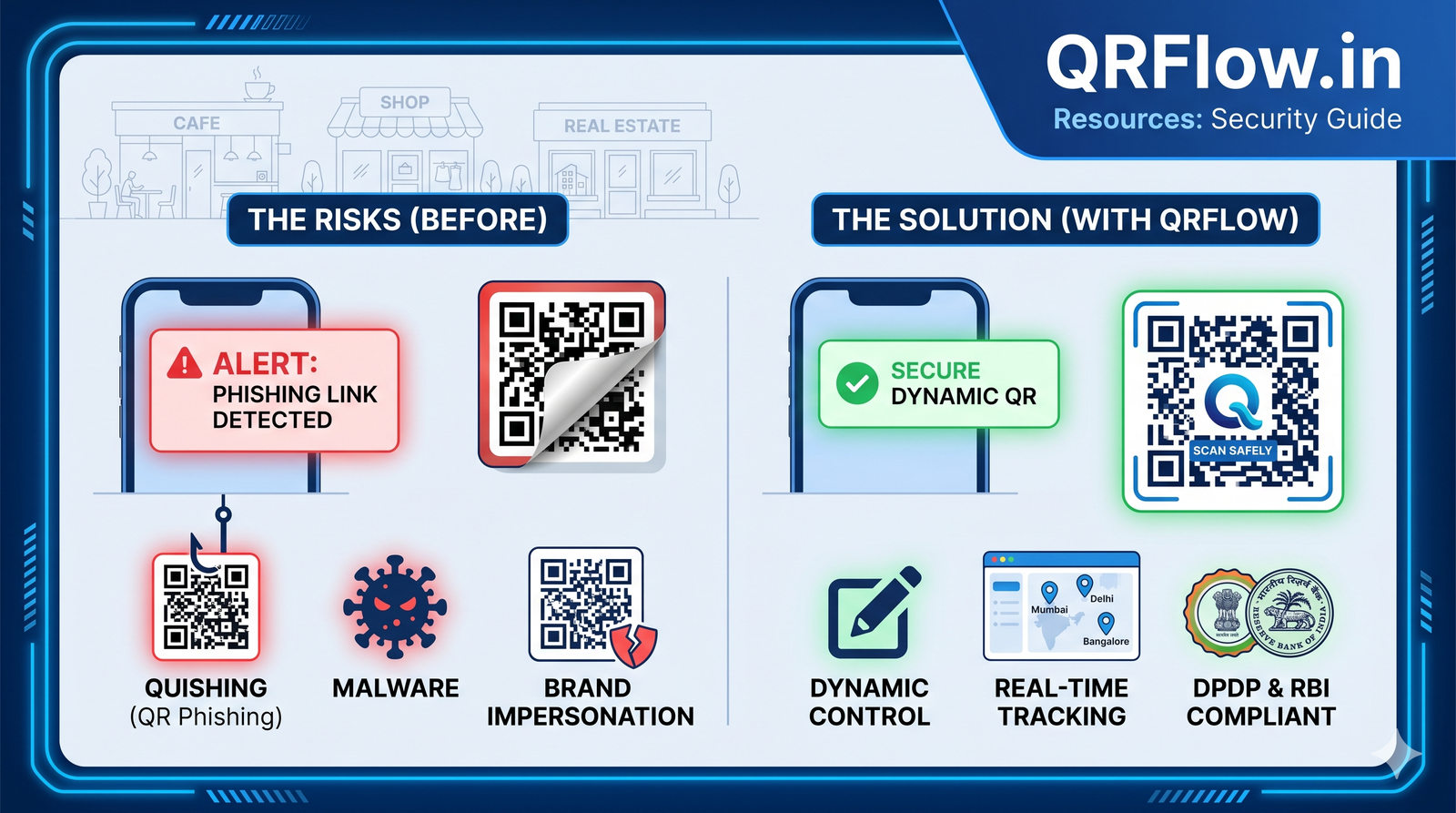
Quick Summary: 3 Key Takeaways
Quishing is Rising: "QR Phishing" (Quishing) is the #1 threat to Indian retail and hospitality in 2026.
Dynamic is Safer: Unlike static codes, dynamic QR codes allow you to fix or redirect compromised links instantly without reprinting materials.
Compliance Matters: Ensure your QR provider complies with India’s DPDP Act and RBI security guidelines to protect customer data.
Why QR Code Security is Essential for Indian SMBs
Are you sure the QR code on your restaurant table or clinic wall hasn't been tampered with? As digital adoption explodes across Tier 2 and Tier 3 India, qr code security risks have moved from technical theories to daily headlines.
In 2025, we observed a 40% spike in "overlay scams" in cities like Bangalore and Pune, where fraudsters pasted their own QR stickers over legitimate business codes. For a small business owner, a single malicious scan can lead to customer data theft, financial loss, and a destroyed reputation.
In this guide, you will learn:
The 3 most common QR scams targeting Indian SMBs.
The difference between high-risk static codes and secure dynamic systems.
A step-by-step framework to secure your digital presence.
Common QR Code Security Risks: Quishing & Malware
When discussing digital safety for a restaurant qr code menu or retail tags, three main threats emerge in the Indian context:
1. Quishing (QR Phishing)
Just like email phishing, "Quishing" tricks users into visiting a fake website. For example, a customer thinks they are scanning for a menu but is redirected to a page asking for their Aadhaar or UPI PIN.
2. Malware Distribution
A compromised QR code can trigger an automatic download of malicious software onto a customer's phone. This is particularly dangerous for Android users who may not have the latest security patches.
3. Brand Impersonation
Criminals create codes that look identical to your brand but lead to a scam site. This "digital hijacking" can happen to anyone from a Delhi coaching centre to a Bangalore real estate developer.
Pro Tip: When placing codes in high-traffic areas like Mumbai Metro stations or malls, use high-quality acrylic stands rather than paper stickers. Stickers are 5x easier for scammers to replace with a malicious "overlay."
Static vs. Dynamic QR Codes: What’s Best for You?
If you are serious about mitigating qr code security risks, the choice between static and dynamic is clear. Static codes are permanent; if the link is hacked, you must throw away every single printout.
| Feature | Static QR Code | Dynamic QR (QRFlow) |
|---|---|---|
| Editability | Impossible (Permanent) | Instant (Update anytime) |
| Security Control | Zero | High (Pause/Redirect link) |
| Indian Pricing | Free (High reprint cost) | Free Plan Available |
| Risk Mitigation | Low | High (Link protection) |
Step-by-Step: Securing Your Business QR Strategy
Use Branded URLs: Don't use long, suspicious-looking links. QRFlow provides clean, trustworthy URLs that customers feel safe clicking. (Time: 2 mins)
Enable Scan Analytics: Monitor where and when people are scanning. Sudden spikes from unexpected locations are red flags. (Time: 5 mins)
Physical Inspection: Make it a habit to check your physical stickers daily for "overlays" or tampering. (Daily routine)
Apply HTTPS: Never link to a site that doesn't have an SSL certificate. This is crucial for digital menu qr code safety.
Ready to create a secure QR code for your business? Try QRFlow Free →
Tracking Scans & Compliance (DPDP Act)
In India, the Digital Personal Data Protection (DPDP) Act requires businesses to be transparent about data collection. Many "free" QR generators harvest user data and sell it to third parties.
At QRFlow, we prioritize Trustworthiness. We anonymize IP addresses after 24 hours and do not track PII (Personally Identifiable Information) without consent. This keeps your business compliant with RBI and MeitY guidelines.
ROI Reality Check: A typical Indian restaurant saves INR 18,000/year by switching to dynamic QRs, avoiding the "scam-and-reprint" cycle common with static codes during festivals like Diwali or Holi.
FAQs: Your Security Questions, Answered
Q: Can a QR code itself contain a virus? A: Technically, no. A QR code is just data (usually a URL). The risk comes from the destination it points to. Always use a provider that allows you to update qr code menu links instantly if a destination is compromised.
Q: How do I know if my restaurant QR code was hacked? A: Check your scan analytics. If you see scans from countries you don't serve, or if customers report being asked for personal info like UPI PINs, your code has been compromised. Switch to a free QRFlow account to gain full visibility.
Q: Is it safe to use QR codes for UPI payments? A: Yes, provided you follow RBI guidelines. Never scan a QR code to "receive" money—scanners are only for "sending." Ensure your payment QR is integrated directly with trusted apps like PhonePe, Google Pay, or Paytm.
5-Step QR Security Checklist
[ ] Choose dynamic QR for instant link control.
[ ] Verify SSL: Ensure all links start with https://.
[ ] Daily Physical Check: Run your finger over the QR to feel for sticker overlays.
[ ] Brand Your QR: Add your logo to make it harder for scammers to replicate your design.
[ ] Track Scans Weekly: Use the QRFlow dashboard to spot suspicious activity.
Conclusion: Secure Your Brand Today
As digital adoption grows across Tier 2 and Tier 3 India, qr code security risks will only become more sophisticated. Don't wait for a security breach to protect your customers. By choosing a secure, dynamic platform, you protect both your revenue and your reputation.
Save on reprinting costs.
Monitor every scan in real-time.
Stay Compliant with Indian data laws.
Start your free QRFlow account today — no credit card needed, setup in < 5 minutes.
Author Bio
Rajesh Kumar
Product Lead, QRFlow.in | 10+ years experience in Cybersecurity.
Rajesh has helped over 500 Indian SMBs transition to secure digital operations. He is a frequent contributor to discussions on India's DPDP Act and digital retail safety.
Reviewed by: Amit Sharma, Technical Architect