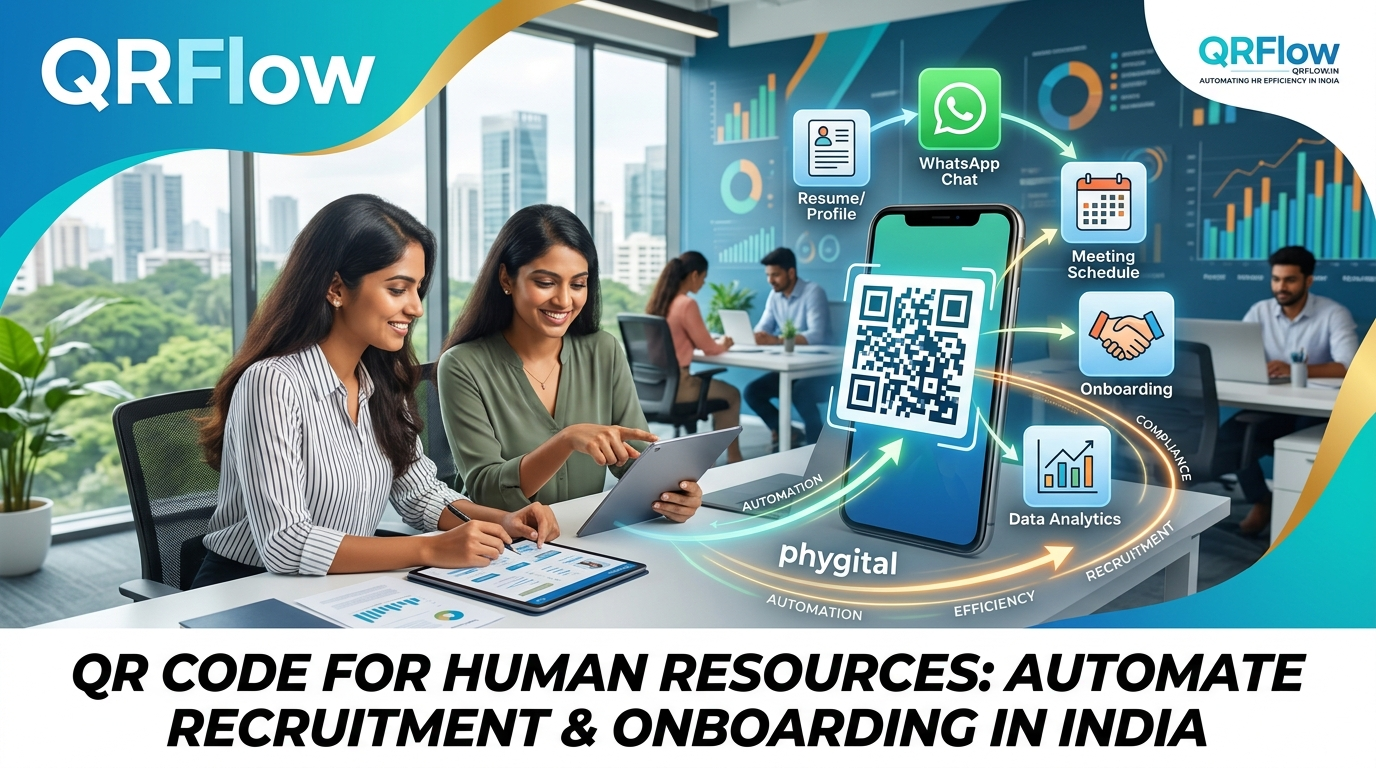
In the high-stakes landscape of Indian talent acquisition, a "dead link" on a campus recruitment banner or a static QR code on a job advertisement isn't just a minor glitch—it is a lost hire and a wasted marketing budget. As India moves toward a Phygital (Physical + Digital) corporate environment, Human Resources departments are transitioning from static imagery to QRFlow’s Dynamic Infrastructure.
Static QR codes are permanent; once printed, the destination URL cannot be changed. If your career page URL migrates or your job posting expires, that printed asset becomes electronic waste. QRFlow solves this through 301/302 Redirection management, allowing you to update the backend destination of a QR code in real-time without ever reprinting your collateral.
Static vs. QRFlow Dynamic: The HR Infrastructure Comparison
| Feature | Static QR Codes (Free Tools) | QRFlow Dynamic QR (Enterprise) |
|---|---|---|
| URL Flexibility | Permanent (Broken links if URL changes) | Real-time 302 Redirection |
| Data Tracking | Zero Analytics | Device, OS, & IP-based Location |
| Security | High risk of "QR-ishing" (Phishing) | Managed Redirects & Brand Security |
| Lead Generation | Redirects only | Integrated WhatsApp & UPI Flows |
| Compliance | Non-existent | DPDP Act 2023 Data Sovereignty |
| Scalability | Manual creation | Bulk Generation & API Support |
5 Deep-Dive Use Cases for the Indian HR Ecosystem
1. Phygital Campus Recruitment & Spot Hiring
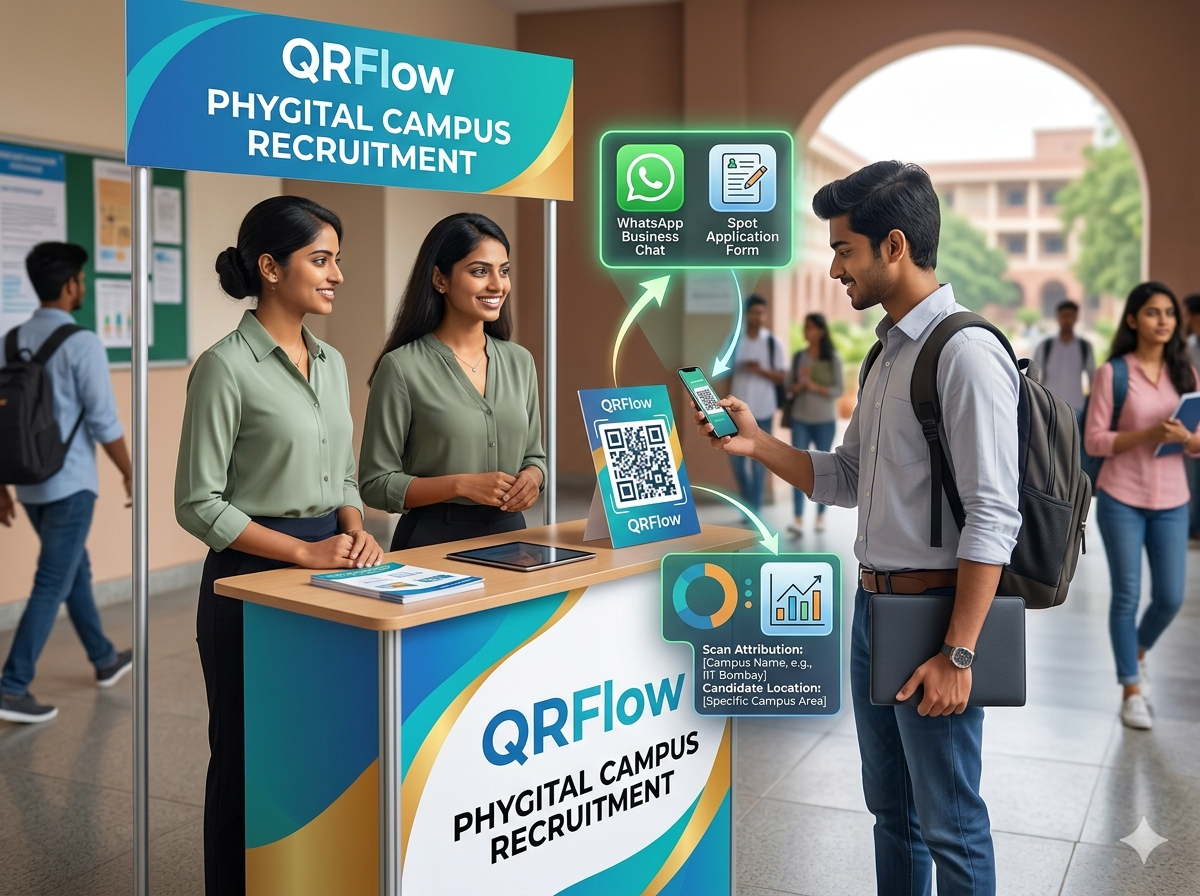
In India’s massive campus recruitment drives, speed is everything. By placing QRFlow codes on standees and brochures, students can scan to instantly open a pre-filled WhatsApp Business chat or a mobile-optimized application form. HR teams can track which specific campus (via IP-based location) is generating the highest engagement, allowing for data-driven "Cost-per-Hire" analysis.
2. Frictionless Onboarding & Document Collection
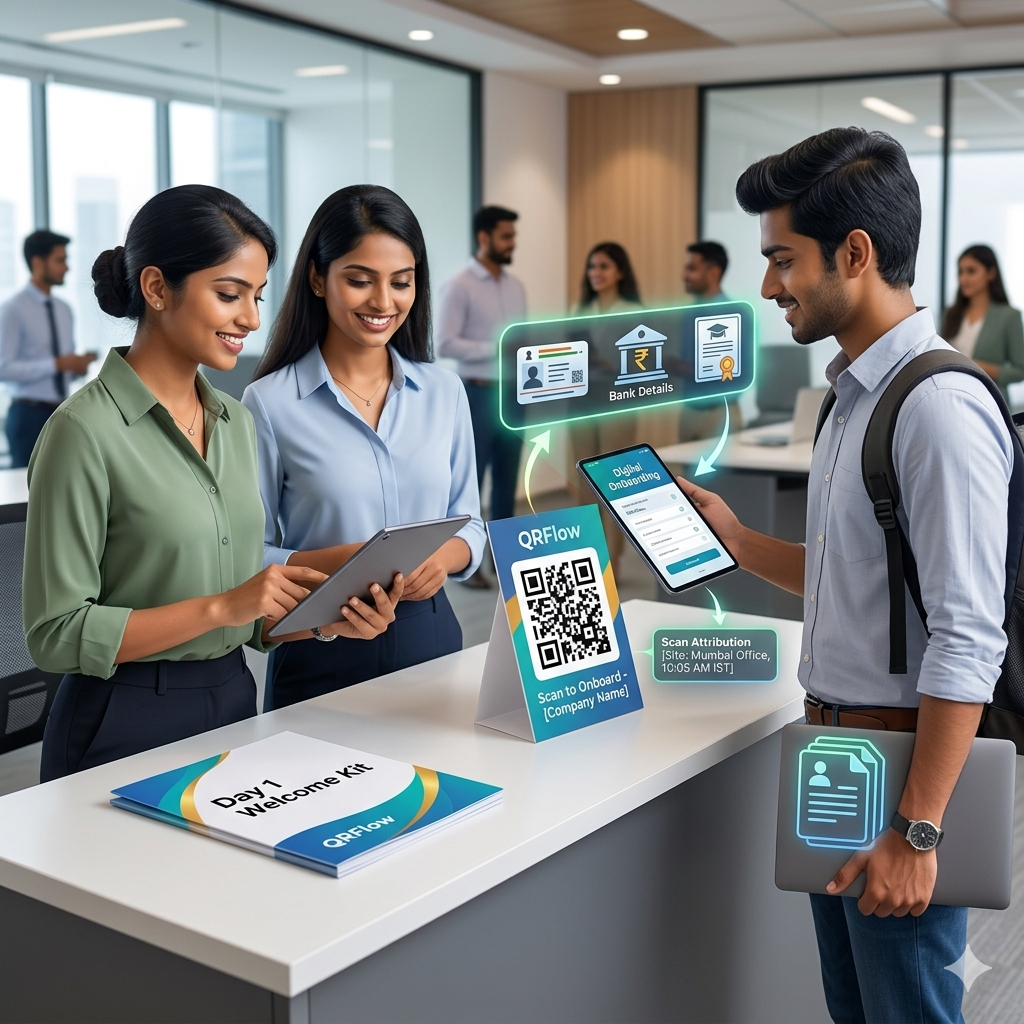
New hires in India often struggle with fragmented document submission. With QRFlow, a "Welcome Kit" includes a single dynamic QR code. On Day 1, the recruit scans it to access the onboarding portal. As the recruit moves from "Induction" to "Policy Sign-off," the HR manager updates the QRFlow destination in the backend—no new links required.
3. Employee ID Cards with Dynamic Data
Transform standard plastic ID cards into portal gateways. A QR code on the back of an ID card can link to the company’s internal Employee Self-Service (ESS) portal. Because these are managed redirects, if an employee leaves, the link can be deactivated or rerouted to a "Return Property" form, enhancing corporate security.
4. Direct UPI-Linked Employee Referrals
To incentivize referrals, use QR codes that lead to a referral dashboard. For successful hires, the "Payout" info can be integrated with UPI payment flows, allowing employees to track their referral bonuses directly. This transparency significantly boosts internal engagement in the Indian tech and manufacturing sectors.
5. Compliance & DPDP Act Awareness
With the Digital Personal Data Protection (DPDP) Act 2023, Indian companies must be transparent about data collection. QRFlow allows HR to link to dynamic "Privacy Notices" at every touchpoint. Because you can track Scan Attribution, you have a digital audit trail proving that employees were provided access to mandatory legal disclosures.
Technical Advantage: Why QRFlow Beats "Free" Generators
Most free QR generators use unoptimized, long URLs that result in "dense" QR codes which are difficult for budget smartphones to scan. QRFlow utilizes Latency Optimization and shortened, branded slugs to ensure high readability even in low-light environments.
O2O Attribution: We bridge the "Offline-to-Online" gap by providing granular analytics. Know if your talent is coming from a newspaper ad in Delhi or a billboard in Bengaluru.
Brand Security: Unlike free tools that might inject ads or redirect to third-party sites, QRFlow’s managed backend ensures your candidates never leave your brand's trusted ecosystem.
GS1 Standards: Our architecture is built to support global identification standards, ensuring your QR codes are future-proof for international operations.
Explore our full list of enterprise-grade Features to see how we prioritize speed and security.
Implementation Guide: 3 Steps to HR Automation
Register: Create your account at the QRFlow Sign Up page to access the central dashboard.
Design & Deploy: Use the dashboard to create high-resolution, branded QR codes. Choose between "Website," "WhatsApp," or "vCard" types based on your specific HR need.
Track & Optimize: Monitor scan counts and geographic data in real-time. Update the destination URL at any time via the Login portal without changing your printed posters.
India Business FAQ: HR Edition
Q1: Does QRFlow charge per scan?
No. Unlike many international competitors, QRFlow offers transparent Pricing (INR) with unlimited scans on our professional tiers, ensuring your recruitment budget remains predictable.
Q2: Is the data hosted in India for DPDP compliance?
Yes, we prioritize data sovereignty and security protocols that align with the Digital Personal Data Protection Act 2023 requirements for Indian enterprises.
Q3: Can we generate QR codes in bulk for 1,000+ employees?
Absolutely. Our backend supports bulk generation and API integration for large-scale corporate deployments.
Q4: What happens if I want to change the job link after printing 5,000 flyers?
With our dynamic 302 redirection, you simply log in to your dashboard and paste the new URL. The printed QR code remains exactly the same but leads to the new destination instantly.
Q5: Can I get a GST invoice for my corporate filing?
Yes, all Indian business accounts receive valid GST invoices for easy tax input credit.